Averaging Pitot Tube: A Differential Pressure-Based Flow Meter for Ducts and Pipes
The averaging Pitot tube is a permanently installed differential pressure flow meter designed to derive a bulk flow rate by directly measuring the average dynamic pressure across a pipe or duct’s cross-section.
Core Principle & Design
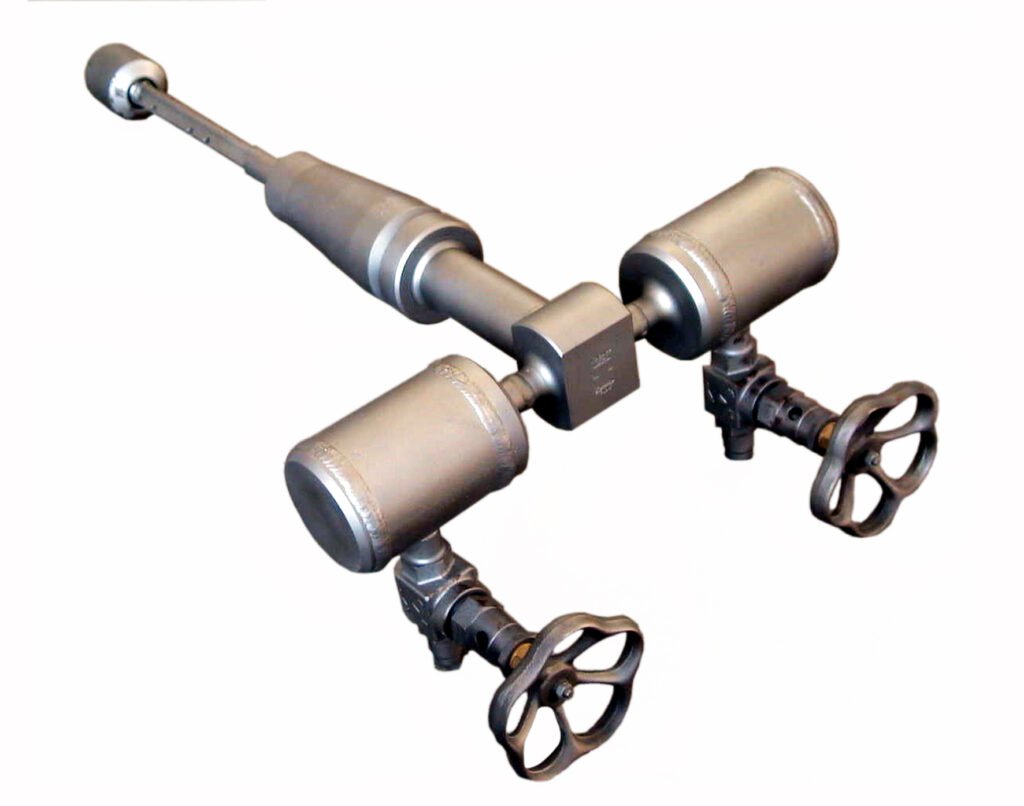
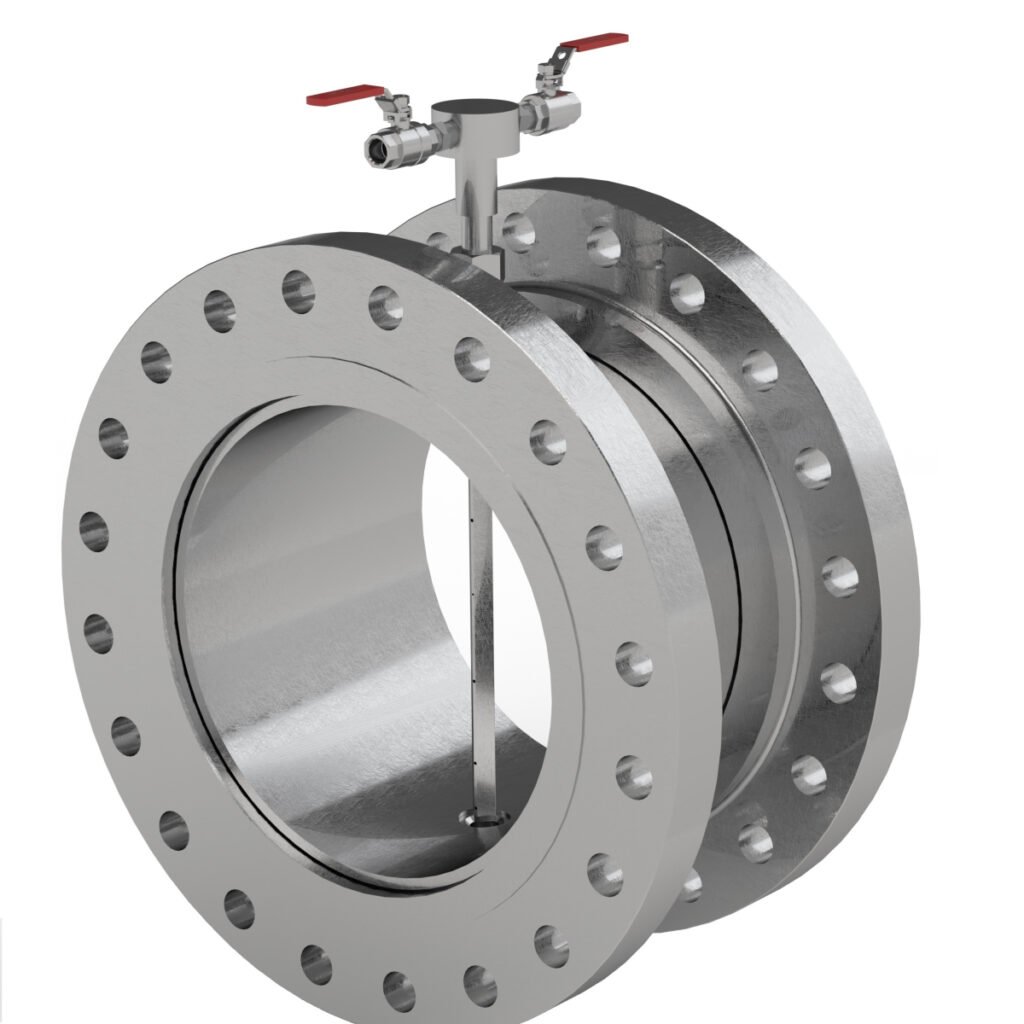
Unlike a single-point Pitot tube, it employs a sensing element—typically a rod, tube, or blade—that spans the entire diameter. Multiple upstream sensing ports are strategically positioned along its length according to log-linear, log-Chebyshev, or other algorithms to sample the velocity profile. These ports are internally manifolded to a common chamber, providing a single, averaged total pressure output. A separate static pressure port is located on the pipe wall or on the probe body. The differential between these two pressures represents the average dynamic pressure, from which the volumetric flow rate is calculated.
Key Characteristics
- Advantages: It creates a minimal permanent pressure loss (typically <0.1% of differential pressure), offers a wide turndown ratio, requires very short straight pipe runs (often 5D upstream and 3D downstream), and is simple to install in existing lines via a single insertion point.
- Limitations & Considerations: Its accuracy is highly dependent on the quality of the internal averaging and a stable, predictable velocity profile for calibration. It is less suitable for applications with rapidly changing or highly asymmetric profiles, very low Reynolds number flows, or fluids laden with solids that may clog the sensing ports.
Primary Application
It is a prevalent, cost-effective solution for measuring the flow of clean gases, steam, and some liquids in large-diameter pipes across industries such as power generation, HVAC, and chemical processing.
Features
Accuracy: ±1.5% of rate; ±1.0% of rate; ±0.5% of rate
Body material: Duplex 2205, 304, or 316 stainless steel, Hastelloy C-276, 254, SMO, carbon steels; Special materials on request.
Calibration: Calibrated for customer application
Fitting Type: Flanged, threaded, hub or weld-end standard; Others on request.
Head Loss: Varies with beta ratio and DP
Installation Requirement: Upstream ≥ 7D, Upstream ≥ 3D
Line size: 0.5 to 180″ or larger
Pressure Range: Flange ISO PN 2.5 to 420 or ASME 150 # to 2500 #, retractable.
Repeatability: ±0.1%
Standard Beta Ratios: 0.15 to 0.80, special betas available
Transmitter Mounting: Direct or Remote